GlobMetal Promotions Banner

Buying Your Way In: How the Live Metal Industry Quietly Changed Since 2010

Fifteen years ago, getting on stage in the heavy music world was mostly about time, persistence, and who knew your name in the right circles.

You played local shows, you built a following city by city, and if things went well, someone eventually opened a door for you. It wasn’t easy but it was linear. There was a sense that if you kept going long enough, you would earn your place. That version of the industry still exists today. It’s just no longer the one most bands are choosing.

What Changed

What changed wasn’t only the technology or the way people listen to music. What really changed is the speed of expectation. Bands don’t want to spend ten years building slowly anymore, and the industry quietly created an alternative. There are now two clear paths.

The Traditional Route

The first is the traditional route: slow, organic, and brutally uncertain. A band releases music, pushes it through every possible channel, plays wherever they can, and hopes momentum builds. Sometimes it does. Most of the time, it doesn’t.

The reality is harsh - only a tiny fraction of bands that rely purely on organic growth ever reach an international level. Not because they lack talent, but because the space is overcrowded and attention is limited.

The Second Path

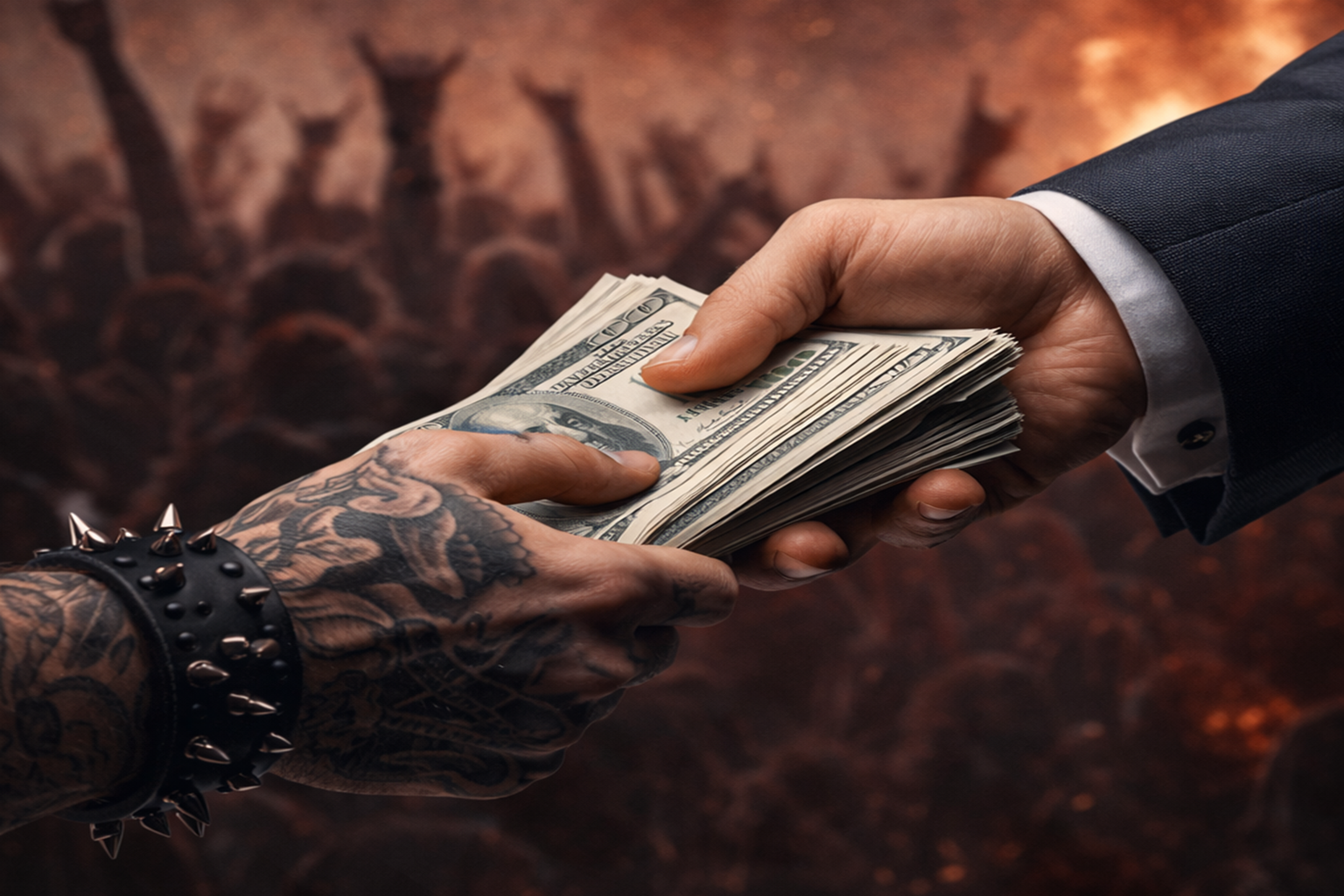
The second path is faster, far more expensive, and far more deliberate. This is where pay-to-play enters the picture, though within the industry, it’s rarely called that out loud. Bands invest money to get onto bigger stages. They buy support slots. They secure early positions on major festival lineups. And when it’s done properly, it isn’t a one-time move - it’s a long-term campaign.

A single show doesn’t change anything. A single festival doesn’t either. What actually works is repetition.

What Actually Works

Bands that successfully use this route treat it like a multi-year strategy. They go out on support tours again and again - not five shows, but thirty, sometimes more, every year. They return to the same markets. They stand in front of the same type of audience until they stop being “the unknown opener” and start being recognized. Alongside that, they place themselves on large festival bills - not once, but consistently, often targeting events with audiences in the five-digit range.

Two or three major festival appearances per year, combined with heavy touring, over the course of several years — that’s where things start to shift. For some bands, that shift happens in two or three years. For others, it takes five, sometimes closer to ten. The difference usually comes down to the music itself and what happens on stage. Exposure can be bought but impact cannot.

The Promoter Perspective

From the outside, this model often gets criticized. The assumption is that festivals and promoters are simply selling stage time to whoever can afford it. But that view misses how the live business actually operates. On a large event scale, the money paid by an unknown band for an early slot is almost irrelevant. At a festival drawing tens of thousands of people, a small performance fee doesn’t even begin to touch the real expenses — production, staffing, logistics. It’s a drop in the ocean.

The real reason those fees exist is much more practical: When a promoter gives a slot to a band with no proven audience, they are taking on additional risk. Gates need to open earlier. Crew needs to be in place longer. Sound engineers, security, technical staff - everything starts running sooner, and all of that costs money. On top of that, there’s commitment. A band that invests financially is far less likely to cancel last minute or treat the opportunity casually. In that sense, the payment acts less like a profit source and more like a filter. It shows intent. It shows seriousness. It proves that the band is willing to invest in being there, not just hoping for a free chance.

The Uncomfortable Truth

Paying to play is, essentially, a shortcut. Not a guarantee, not a cheat code, but a shortcut.

It compresses time. It puts bands in front of large audiences years earlier than they would normally reach. But like any shortcut, it only works if there’s something real behind it. If the songs don’t connect, if the live show doesn’t leave an impression, the exposure disappears as quickly as it came. That’s why so many bands invest heavily and still see no real growth. They reach the stage, but they don’t capture the moment.

What Separates Bands

The ones who do understand that the stage itself isn’t the goal - it’s what happens around it. The follow-up, the consistency, the return to the same territories, the gradual shift from unfamiliar to familiar. That’s where the real work is.

Then vs Now

Looking back at 2010, the system felt more organic, maybe even more “fair” to some. But it was also slower and far less predictable. Today’s landscape is more transparent in its own way. It offers a faster route, but it demands clarity, commitment, and, in many cases, serious financial backing. Neither path is easy. One costs time. The other costs money. Most bands end up spending both.

The difference in 2025 is that the choice is no longer hidden.